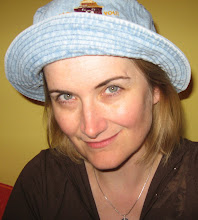
Daughter of Nicholas Gage, in her late 20s, New York journalist Eleni Gage gave up her job and spent a year in the small village of Lia in northern Greece in order to rebuild the family home which had been abandoned 50 years before when her grandmother Eleni was infamously murdered.
What's wonderful for me about this book is that the author not only shows the every day life of the village as it is today but also reveals what it's like being the first generation born in the USA, complete with tons of aunties full of life advice from the old country.
If you've ever wondered what it would be like to move to a small Greek town in the mountains, this is the book for you. Rather unromantically, every single inhabitant is at or over retirement age. But, Eleni makes friends with most, creating a community and support network of grey haired friends. You get the feeling that if younger Greeks stuck around in the old towns, she'd be there still.
Includes eight pages of photos of the people and places described in the book (very welcome, especially because so few memoirs include photos) and details about Eleni's home renovation (nearly a complete rebuild) of her grandmother's traditional stone home.
Monday, June 1, 2009


Friday, May 29, 2009
Book Review: Our Man in Belize by Richard Timothy Conroy
When I heard Belize got hit by a 7.1 earthquake yesterday morning, my thoughts immediately turned to this classic diplomatic memoir. Back in the fall of 1961, when Belize was still British Honduras and its biggest city had a population of 30,000, Hurricane Hattie hit causing massive devastation. 400 buildings were wiped out, along all utilities, roads, and the town's supply of drinking water (Conroy's description of dealing with would-be rescuers a few days later when he'd had no sleep since Hattie and nothing safe to drink but alcohol is marvelous.)
Although it's now touted as a green tourism destination, back in 1961, Belize was a butthole pure and simple. It was one of those diplomatic postings you got when you seriously pissed off the wrong person at State Department.
In the decades since his tour as Belize's US Vice Consul, Conroy, self-admittedly, honed his stories until they "took on a life of their own". And boy are they good. Reading this book, you completely understand why St Martin's editor Ruth Cavin, laughing like crazy, paid for Conroy's lunch at DC's Hotel Madison (not a cheap place), and then begged him to write it all down. I'm awfully glad he listened to her.
You'll enjoy this book if:
- You love dry humor, especially targeted at the State Department
- You're a hurricane story buff
- You're considering moving to Belize, now a much-hawked retirement and 2nd home destination for Americans, and would like a reality check on what it was like before the current developers moved in.
Although it's now touted as a green tourism destination, back in 1961, Belize was a butthole pure and simple. It was one of those diplomatic postings you got when you seriously pissed off the wrong person at State Department.
In the decades since his tour as Belize's US Vice Consul, Conroy, self-admittedly, honed his stories until they "took on a life of their own". And boy are they good. Reading this book, you completely understand why St Martin's editor Ruth Cavin, laughing like crazy, paid for Conroy's lunch at DC's Hotel Madison (not a cheap place), and then begged him to write it all down. I'm awfully glad he listened to her.
You'll enjoy this book if:
- You love dry humor, especially targeted at the State Department
- You're a hurricane story buff
- You're considering moving to Belize, now a much-hawked retirement and 2nd home destination for Americans, and would like a reality check on what it was like before the current developers moved in.
Wednesday, May 27, 2009
Book Review: No News at Throat Lake by Lawrence Donegan
On vacation with an old girlfriend, London-based journalist Lawrence Donegan fell in love with a small country village in Ireland. They spent their days at the beach and nights watching stars in the marvelously clear skies. Touched to his core by the "vast stretches of wild unspoiled beauty" and a slow, ultra-relaxed pace of life, Lawrence decided to chuck in his job at The Guardian and start over again working at a farm in Creeslough.
In this very funny memoir, Lawrence tells the story of what it's really like when you move to the Irish countryside. As you can guess, his farmer's helper job was short-lived (going from a desk job to a muddy field with a bunch of angry cows doesn't usually work out.) So, he threw himself o the mercy of the editor of the local paper, circulation 2,745, and became a local reporter.
It was a fantastic job for an outsider to luck into -- access to all the local events along with the official right to go poking your nose into everyone's business. If I ever move to another country where I speak the language well enough to pull it off, I'll try to do the very same thing.
You'll like this book if:
- You ever dreamed of the simple rural life in amidst "film set" beauty.
- You followed the story of American heiress Doris Duke's butler Bernard.
- You're a journalist or would-be reporter.
In this very funny memoir, Lawrence tells the story of what it's really like when you move to the Irish countryside. As you can guess, his farmer's helper job was short-lived (going from a desk job to a muddy field with a bunch of angry cows doesn't usually work out.) So, he threw himself o the mercy of the editor of the local paper, circulation 2,745, and became a local reporter.
It was a fantastic job for an outsider to luck into -- access to all the local events along with the official right to go poking your nose into everyone's business. If I ever move to another country where I speak the language well enough to pull it off, I'll try to do the very same thing.
You'll like this book if:
- You ever dreamed of the simple rural life in amidst "film set" beauty.
- You followed the story of American heiress Doris Duke's butler Bernard.
- You're a journalist or would-be reporter.
Friday, May 22, 2009
Book Review: Married to the Foreign Service by Jewell Fenzi & Carl Nelson
Based on 170 oral interviews with US foreign service spouses (nearly all women), this history book is packed with behind-the-scenes details of what diplomatic life was really like from the 1920s to the 1990s.
It's not at all dry -- I was completely engrossed by the personal stories and lengthy quotes which cover everything from being evacuated from Tehran; being stationed in Moscow during the height of the Cold War; surviving coup attempts in Baghdad; coping with the McCarthy hearings; and swimming the Bosporus. Not to mention a few cocktail parties along the way.
Interwoven with these stories, you'll find a history of the role of diplomatic spouse, from an unpaid helpmeet with little or no official training to the upheavals of the women's movement (1972 was the year "they fired the wives") to the end of the century when some spouses were male. Also included, an examination of what it means to be a foreign-born spouse representing your new country when you've barely lived there yourself. (More common than you might think.)
You'll like this book if you:
- enjoy tales of diplomatic adventures from a female perspective.
- are considering a foreign service career yourself (or your spouse is.)
- study women's history.
It's not at all dry -- I was completely engrossed by the personal stories and lengthy quotes which cover everything from being evacuated from Tehran; being stationed in Moscow during the height of the Cold War; surviving coup attempts in Baghdad; coping with the McCarthy hearings; and swimming the Bosporus. Not to mention a few cocktail parties along the way.
Interwoven with these stories, you'll find a history of the role of diplomatic spouse, from an unpaid helpmeet with little or no official training to the upheavals of the women's movement (1972 was the year "they fired the wives") to the end of the century when some spouses were male. Also included, an examination of what it means to be a foreign-born spouse representing your new country when you've barely lived there yourself. (More common than you might think.)
You'll like this book if you:
- enjoy tales of diplomatic adventures from a female perspective.
- are considering a foreign service career yourself (or your spouse is.)
- study women's history.
Wednesday, May 20, 2009
Book Review: Hidden Immigrants, Legacies of Growing Up Abroad, by Linda Bell
When I lived in Northwest Washington DC in my 20s, it was still a fairly sleepy little town with used car dealers and strip clubs within a few blocks of the White House. Aside from a few friends who worked for the government, it seemed everyone else my age was foreign, either a recent immigrant from one of 100 different countries, or a foreign journalist, a World Bank minion, an Iranian refugee, or an embassy staffer. In fact so many people in my neighborhood were foreign that you were assumed foreign until proven otherwise. I was myself often mistaken by fellow Americans for a Swede, and complimented on my well-spoken English!
That foreignness, that international flavor, attracted another demographic like crazy -- foreign service brats. Now young adults who had been brought up around the world by parents in the diplomatic service or other international careers. I remember one boyfriend who kept exclaiming because all the city signs were in English and it was so "incredibly" convenient. He'd never lived anywhere the English language was public before. Like him, many of my friends had lived everywhere as children ... except America itself. Suddenly they found themselves at 21 or 22, ejected from school and family, starting a new life in a strange country.
Now, as a stepmother to two young adults who grew up in two different countries before immigrating to America, I again see that "Which country is mine? Where do I fit?" played out around me.
So, I was happy to find Linda Bell's book, 'Hidden Immigrants' because she helped explain that no-man's-land of adjustment when you've spent much of your life in one country and then move back to your "native" land. Much of the material is direct transcription highlights of oral histories given by 13 real-life 'hidden immigrants' about their adjustment to life back in the home country.
Most fascinating are the conclusions about life patterns that Bell draws from her research. It seems people who grew up outside of their home country, especially those who moved several times, often exhibit very similar patterns, pains and problems. And yet, the stories they told of their childhood, the worlds they lived in... you can't help but be a little jealous.
That foreignness, that international flavor, attracted another demographic like crazy -- foreign service brats. Now young adults who had been brought up around the world by parents in the diplomatic service or other international careers. I remember one boyfriend who kept exclaiming because all the city signs were in English and it was so "incredibly" convenient. He'd never lived anywhere the English language was public before. Like him, many of my friends had lived everywhere as children ... except America itself. Suddenly they found themselves at 21 or 22, ejected from school and family, starting a new life in a strange country.
Now, as a stepmother to two young adults who grew up in two different countries before immigrating to America, I again see that "Which country is mine? Where do I fit?" played out around me.
So, I was happy to find Linda Bell's book, 'Hidden Immigrants' because she helped explain that no-man's-land of adjustment when you've spent much of your life in one country and then move back to your "native" land. Much of the material is direct transcription highlights of oral histories given by 13 real-life 'hidden immigrants' about their adjustment to life back in the home country.
Most fascinating are the conclusions about life patterns that Bell draws from her research. It seems people who grew up outside of their home country, especially those who moved several times, often exhibit very similar patterns, pains and problems. And yet, the stories they told of their childhood, the worlds they lived in... you can't help but be a little jealous.
Saturday, May 16, 2009
Book Review: Moscow Spring by William and Jane Taubman
In the best tradition of academics, the Taubmans eschewed the expat ghetto in Moscow when they lived there in the late 1980s. Instead, they were the only non-Russians in their apartment building and possibly entire neighborhood, just as Gorbachev's reforms kicked in.
In this memoir, written as events were happening and published in 1989, the Taubmans recount their Russian friends and neighbors' daily life and passionate feelings about a future with the cold war ended and capitalism blooming.
You'll find this book this book fascinating if you:
- want insight into the formative early adult experiences that shaped the (mostly) men who are the generation in power in Russia today.
- are interested in studying societies at their moments of earth-shattering transition (not to mention economic upset.)
- consider "may you live in interesting times" a blessing you'd like to be gifted with.
In this memoir, written as events were happening and published in 1989, the Taubmans recount their Russian friends and neighbors' daily life and passionate feelings about a future with the cold war ended and capitalism blooming.
You'll find this book this book fascinating if you:
- want insight into the formative early adult experiences that shaped the (mostly) men who are the generation in power in Russia today.
- are interested in studying societies at their moments of earth-shattering transition (not to mention economic upset.)
- consider "may you live in interesting times" a blessing you'd like to be gifted with.
Thursday, May 14, 2009
Book Review: Four Seasons in Rome by Anthony Doerr
This book is exquisite, luminous, dazzling, poetic, enthralling. It is literature with a capital L. I almost feel as though it should be perfumed with a subtle yet intoxicating scent and cost at least $100 a page.
It's awfully, awfully well written and a vast pleasure to read. (These two things don't always go together you know.)
On the day Anthony and his wife came home from the Boise Idaho hospital with their newly born twins, he received a letter informing him he'd won the Rome Prize from the American Academy of Arts & Letters (a prize he'd been unaware he was up for) which included a free apartment plus writing studio in Rome for an entire year, as well as a stipend to live on.
This book is the story of that year, an insomniac's diary of what it's like to be a new parent in a strange city in a foreign land, as well as what it's like to be an artist working, and sometimes failing to work, at your craft in such an exotic place. Snowfall in the coliseum, fresh fava beans at the greenmarket, a child's first step, 13 obelisks, white gloved policemen, a funeral at the Vatican, pediatricians who make housecalls on Vespas, Caravaggio, peacocks and parrots, Pliny, four-hour dinners, "hopelessly good antipasti"... it's all in there.
You'll adore this book if you:
- Are an armchair traveler yearning for the next best thing to actually being in Rome yourself.
- Are the parent of twin infants (although you won't have time to read it.)
- Want a behind-the-scenes look into the everyday life and creative process of an award-winning 30-something novelist.
It's awfully, awfully well written and a vast pleasure to read. (These two things don't always go together you know.)
On the day Anthony and his wife came home from the Boise Idaho hospital with their newly born twins, he received a letter informing him he'd won the Rome Prize from the American Academy of Arts & Letters (a prize he'd been unaware he was up for) which included a free apartment plus writing studio in Rome for an entire year, as well as a stipend to live on.
This book is the story of that year, an insomniac's diary of what it's like to be a new parent in a strange city in a foreign land, as well as what it's like to be an artist working, and sometimes failing to work, at your craft in such an exotic place. Snowfall in the coliseum, fresh fava beans at the greenmarket, a child's first step, 13 obelisks, white gloved policemen, a funeral at the Vatican, pediatricians who make housecalls on Vespas, Caravaggio, peacocks and parrots, Pliny, four-hour dinners, "hopelessly good antipasti"... it's all in there.
You'll adore this book if you:
- Are an armchair traveler yearning for the next best thing to actually being in Rome yourself.
- Are the parent of twin infants (although you won't have time to read it.)
- Want a behind-the-scenes look into the everyday life and creative process of an award-winning 30-something novelist.
Subscribe to:
Posts (Atom)